**“They Arrested My Son Alive, But They Killed Him” **
In Front of Truth Commission, Kin of Victims in 2017 'Drug War' Killings Decry a Familiar Pattern of Police Misconduct, Corruption
A mother says officers demanded money and kept her son’s death records from her for months. The sister of another victim says police tried to get her to sign papers endorsing their account of his death.
Photos by Mar Bustamante / Adamson University
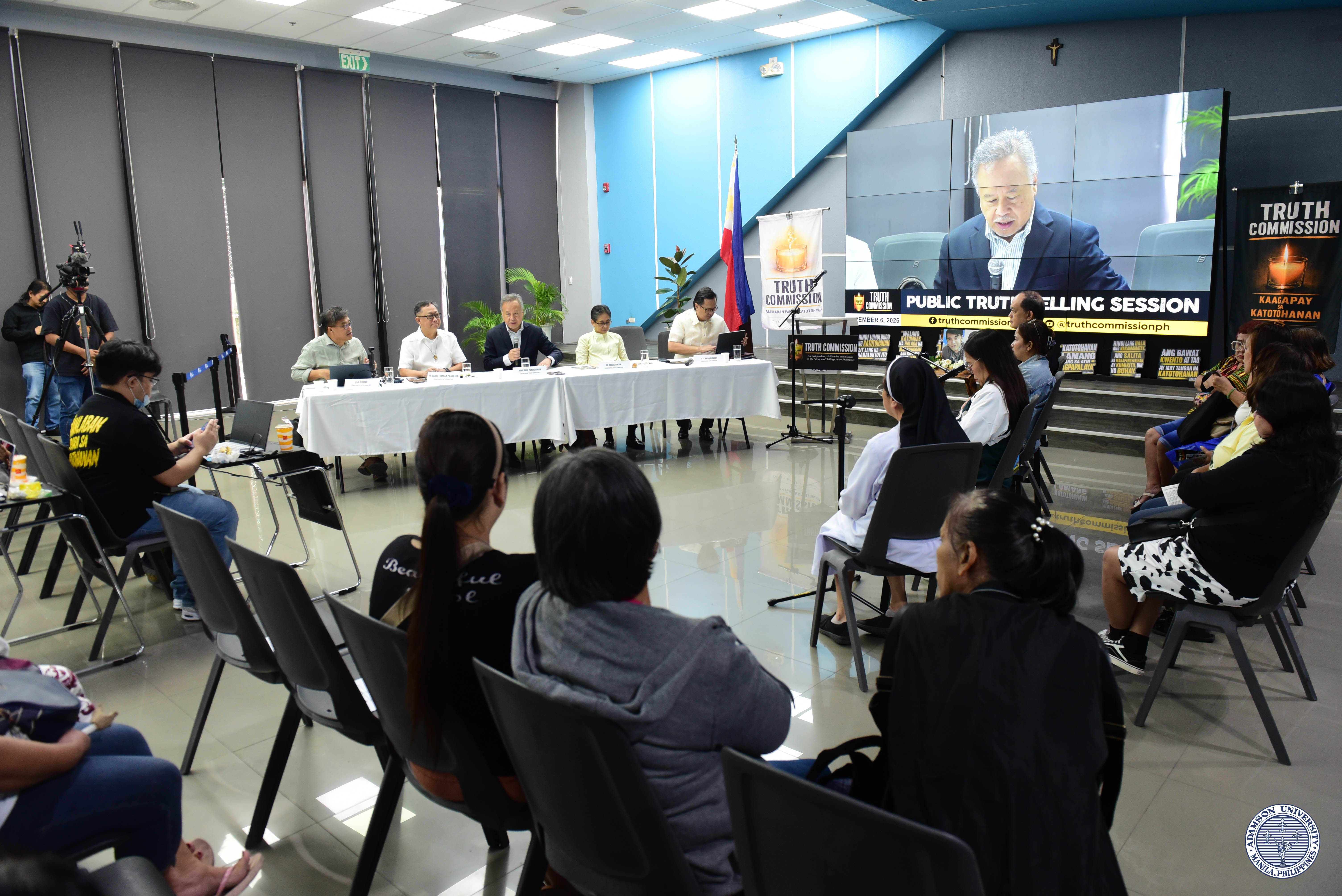
MANILA (Nov. 6, 2026) — At a funeral home, police pressed Rizza Quiamco to sign a paper she understood as endorsing their account of how her brother died. She refused. Marissa Lazaro, whose son was killed in the same reported police operation, described a similar demand. She also said officers sought money from her and withheld the report on her son’s death for months.
The accounts were heard Friday at Adamson University in Manila during the Truth Commission’s sixth public truth-telling session. It was the commission’s first session featuring families of people killed in the same reported police operation.
The testimony was accompanied by findings from Dr. Raquel Fortun, a forensic pathologist and commission member. She said the men’s death certificates were deficient, the police investigation was deeply flawed, and a medical report on one of the deaths described an autopsy that, in her assessment, had not taken place.
Commissioner Carlos Conde said the testimony pointed to a failed system for investigating deaths, marked by careless police and forensic work and little concern for victims’ families. Lazaro’s account of officers seeking money from her raised a further allegation of corruption.
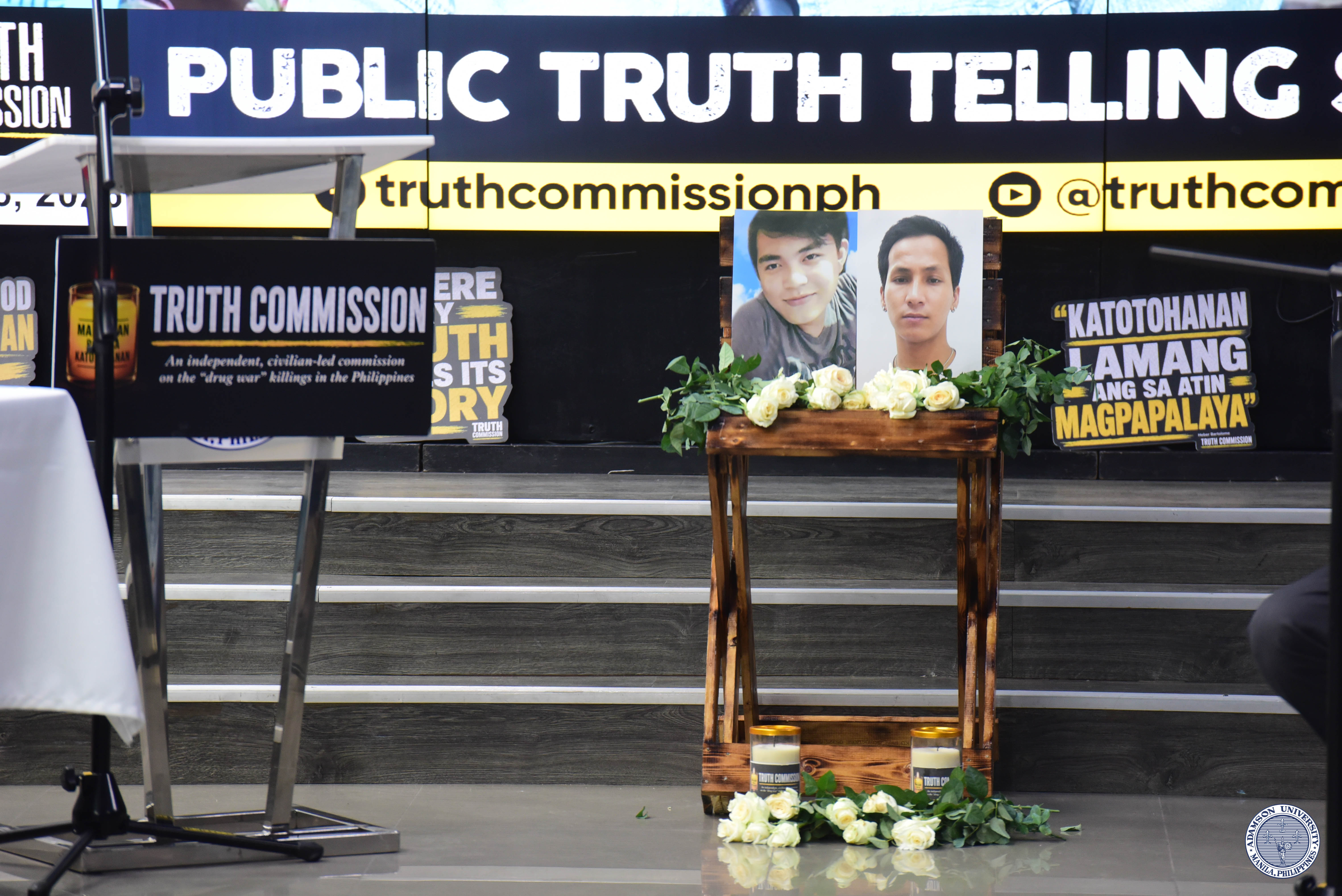 Police said Lazaro’s son, Christopher Lazaro, 20, and Quiamco’s brother, Alberto Paragas, 32, died on Aug. 5, 2017, in Marilao, Bulacan, after an alleged attempted holdup. Lazaro said two of Christopher’s friends had been killed hours earlier in Bocaue, a different town.
Quiamco said she went to the funeral home with Paragas’s partner to claim his body after borrowing ₱10,000 she had been told was needed. An officer there told them to sign a paper stating that events had happened as police described them, she said.
Quiamco told Paragas’s partner not to sign. She did not argue with the officer and said she had not read the paper closely.
“We were helpless; we had no way of fighting back,” she said in Tagalog.
Lazaro described a similar encounter. When she returned to the funeral home to address her son’s death certificate, she said, plainclothes officers handed her a paper she understood as consent to classifying the killing as a legitimate police operation. She refused. An officer warned her that she would eventually come to them for help.
“What help can you give my son?” she said she replied. “You already killed him. You can’t bring him back.”
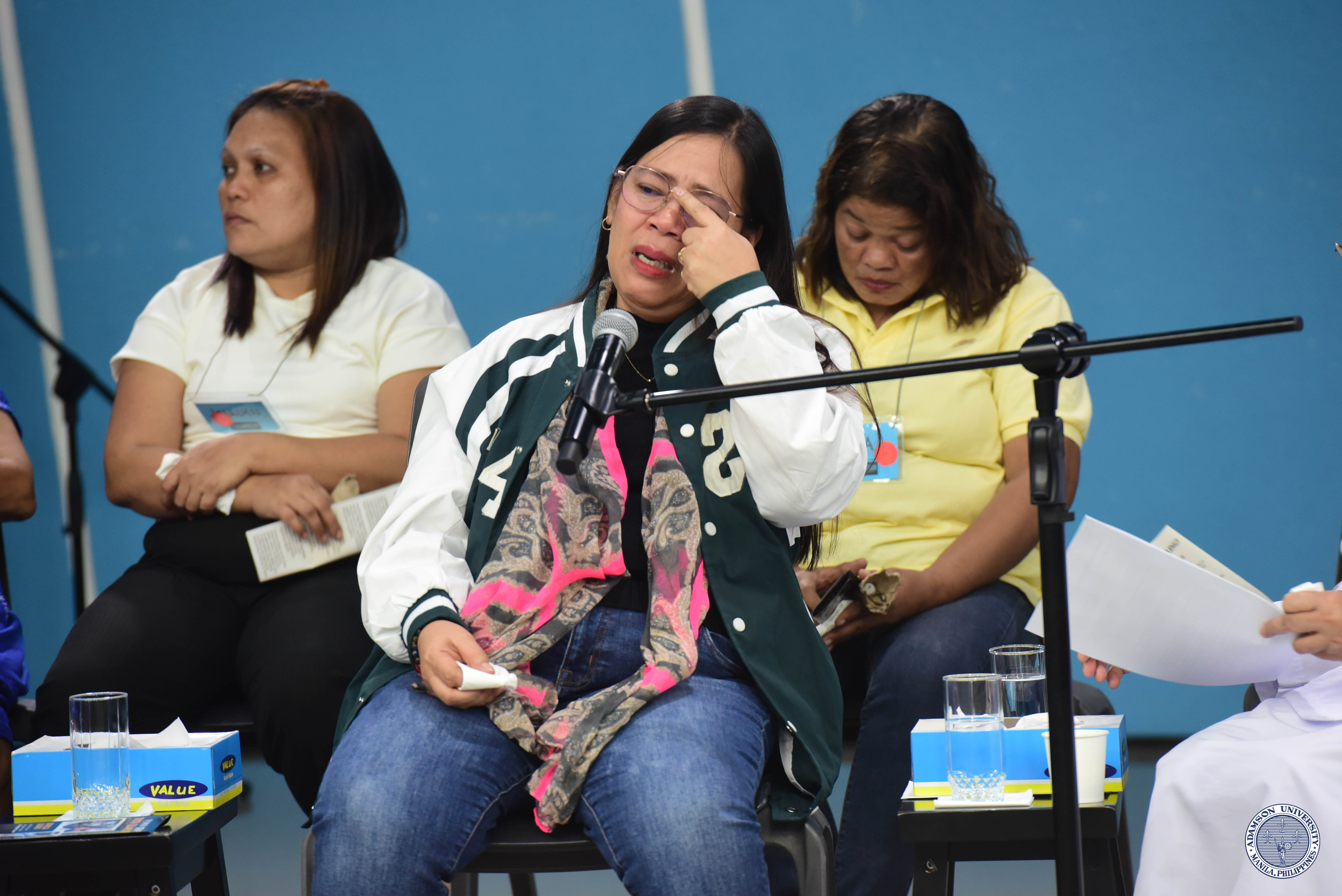 Marissa Lazaro, mother of Christopher
Lazaro said that days before Christopher was killed, he was arrested after being caught in a brawl in which she said he was an innocent bystander. Officers initially demanded ₱10,000 for his release, she said, then reduced the amount to ₱5,000, which she paid. When she asked for a receipt, the officers laughed at her.
After Christopher’s death, Lazaro said, she returned repeatedly to police stations for most of a year to seek records. Officers told her the assigned investigator was away or had gone home, and promised to text her but never did. The first document she received was a logbook entry listing a different name. She said she obtained a police report only after a female officer who had noticed her repeated visits finally gave it to her.
Quiamco said her brother worked as a tricycle driver, helped raise his children and was home by 9 p.m. each night. She said he never used drugs because he despised drug use and that their family had once been victimized by drug users.
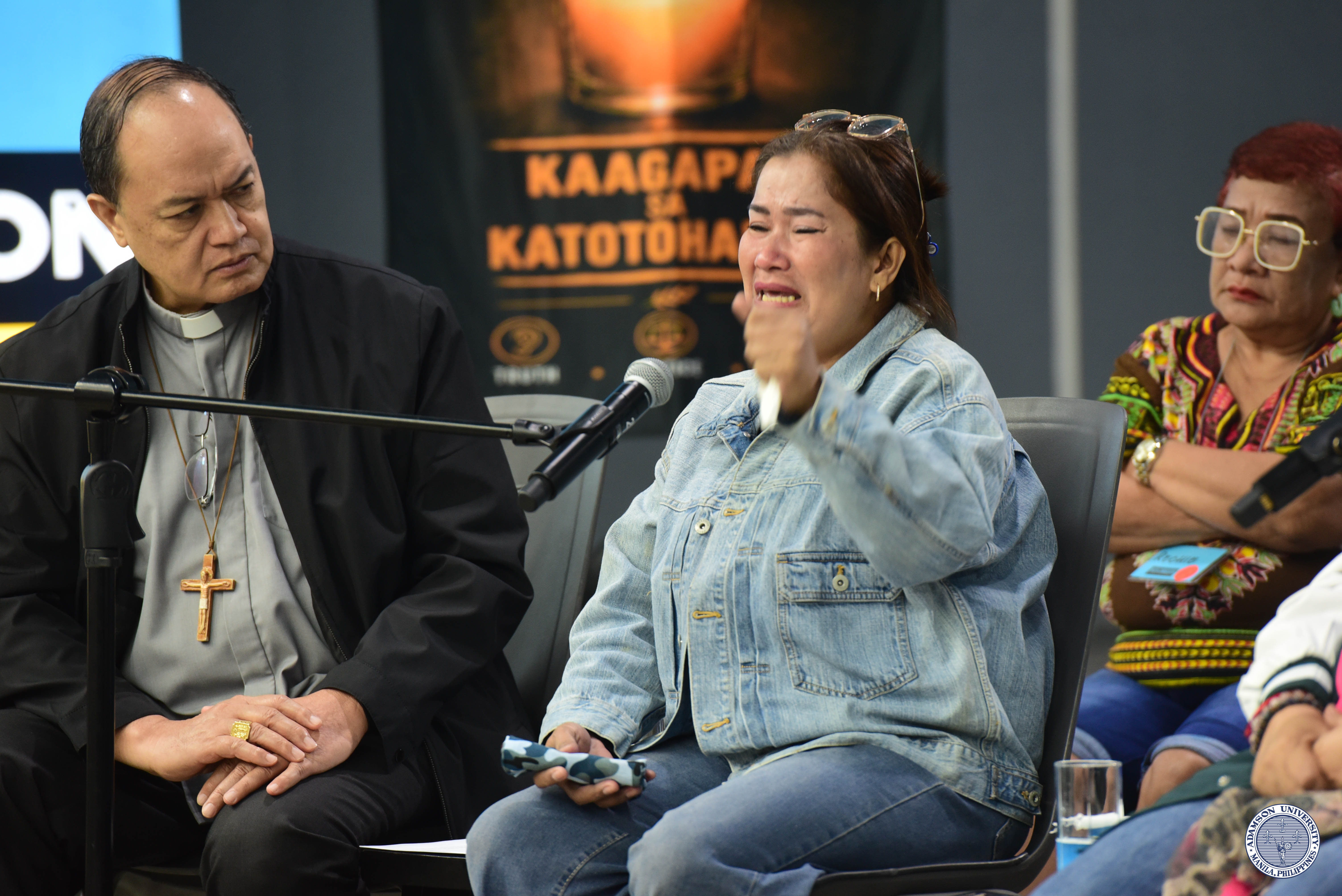 Rizza Quiamco, sister of Alberto Paragas, with Cardinal Pablo Virgilio David
“We are poor, but my brother would never do that,” she said.
At Paragas’s wake, held in a tent on the street, two unfamiliar motorcycle riders shouted that the dead men were holdup suspects, Quiamco said. Neighbors told her the riders were not from the area.
Death certificates left key fields blank
Both death certificates listed the cause of death only as “for autopsy,” while the section identifying the manner of death—such as homicide—was left blank, Fortun told the commission. The same doctor signed both certificates, she said.
Paragas’s certificate listed a gunshot wound to the “right upper extremity,” a term Fortun said could refer to anything from the shoulder to the fingertips. Her preliminary examination of his exhumed remains found a bullet wound extending between the back of the head and the left eye, damage to the breastbone and ribs, and a fractured finger. She said it appeared no autopsy had been performed and that she had been unable to obtain a medical report.
Christopher’s death certificate listed gunshot wounds to the trunk and left leg. A separate medico-legal report from Bulacan described wounds to his head and left thigh. Fortun found his skull intact, with no sign of a head injury. The only damage she found was a broken bone at the top of the neck, which she said could have been fatal. The documents did not match each other or her findings.
“I don’t know where the mistake happened,” Fortun told the commission.
A report describing an autopsy Fortun said did not happen
The report on Christopher said an autopsy had found 100 milliliters of partly digested food in his stomach. Fortun said the body had been cut open only superficially, with the organs left inside. She said the report’s description of the stomach contents was impossible given that the organs had not been examined.
The report also recorded marks on both of Christopher’s wrists, each about 19 centimeters long, which it attributed to binding. Fortun said the marks were striking and suggested he had been tied up, although she could not determine whether with rope or handcuffs. She questioned why the doctor who observed the marks had not raised them with police.
“I bet there is no independence,” she said.
Lazaro said she had seen the marks herself. A doctor at the provincial crime laboratory in Malolos showed her photographs on a monitor, she said, but would not let her take pictures and told her to get a lawyer.
“They caught my son alive, but they killed him,” she said.
Fortun said an injury to Paragas’s hand was consistent with the kind of injury a person might sustain while trying to shield himself. Based on her examination, she classified both deaths as homicides. She also criticized the crime-scene photographs as few in number and taken from poor angles. Some showed bystanders pointing at evidence, which she said risked contaminating it.
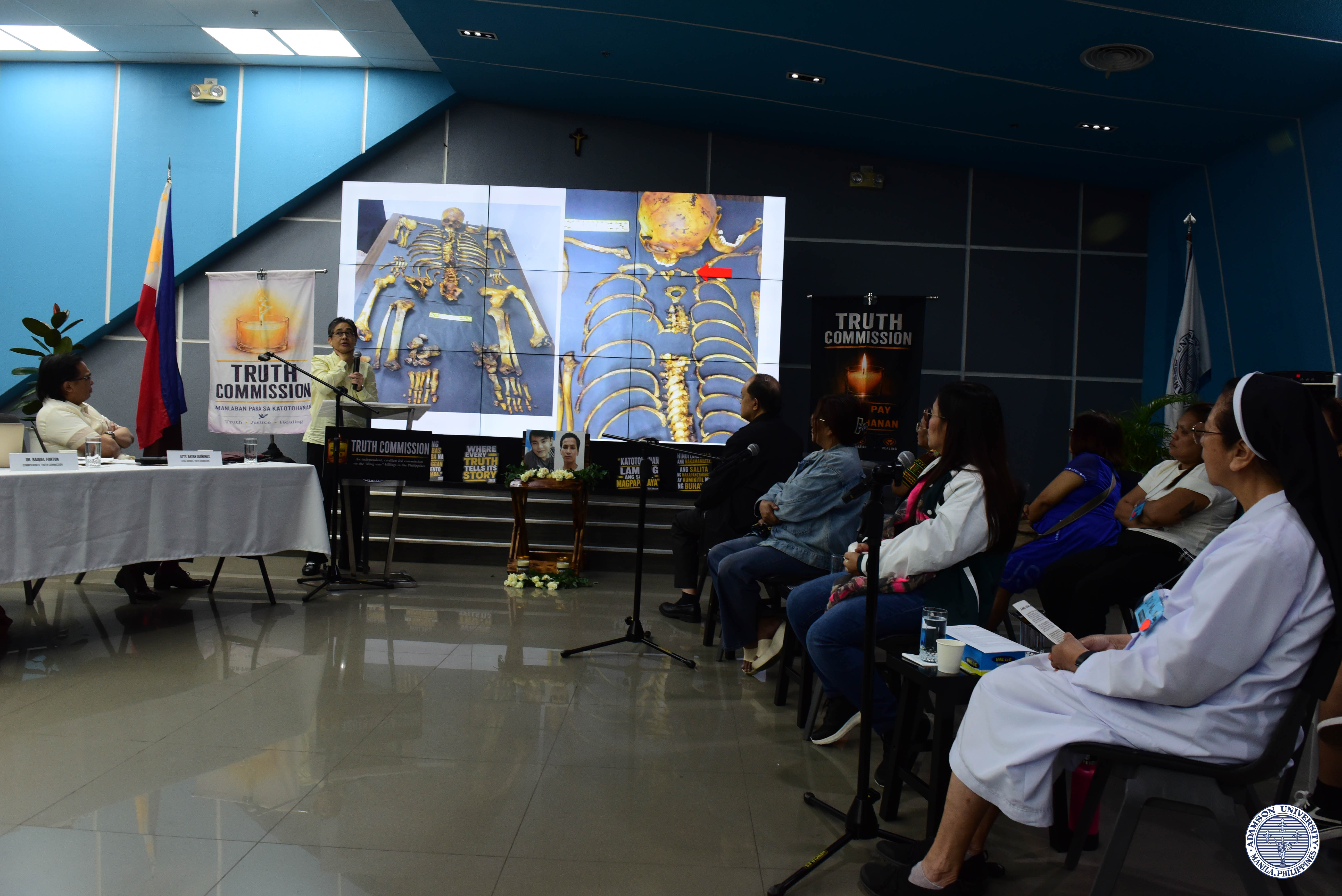 Dr. Raquel Fortun presents her findings
Charges dismissed; families say they never filed complaints
Neither family filed a complaint. Quiamco said she had no means to pursue a case.
“How could I fight?” she said. “I had no money.”
Lazaro said lawyers told her that without a witness willing to come forward, her case would go nowhere. A Justice Department resolution shows that prosecutors dismissed drug and firearms charges, among others, against the two men because they were dead. Quiamco said she learned about the charges roughly four years after the killings.
Commission Chair Judge Raul Pangalangan, a former International Criminal Court judge, said in his opening remarks that the sessions aim to give victims’ families “a safe and meaningful opportunity” to describe what happened. The commission also seeks “to help in the search for justice and hold those responsible to account,” he said. Later, he told Lazaro: “It is good that you did not give up.”
Conde said similar problems had emerged in other commission sessions, which were livestreamed on YouTube. “Unfortunately, it seems all of them are like this,” he said of Fortun’s findings.
Lazaro said she wanted people to understand that “not all victims of the drug war are addicts.” Quiamco said accountability was necessary for her to believe that “there is justice for the poor, not only for the rich.” *(Truth Commission) *