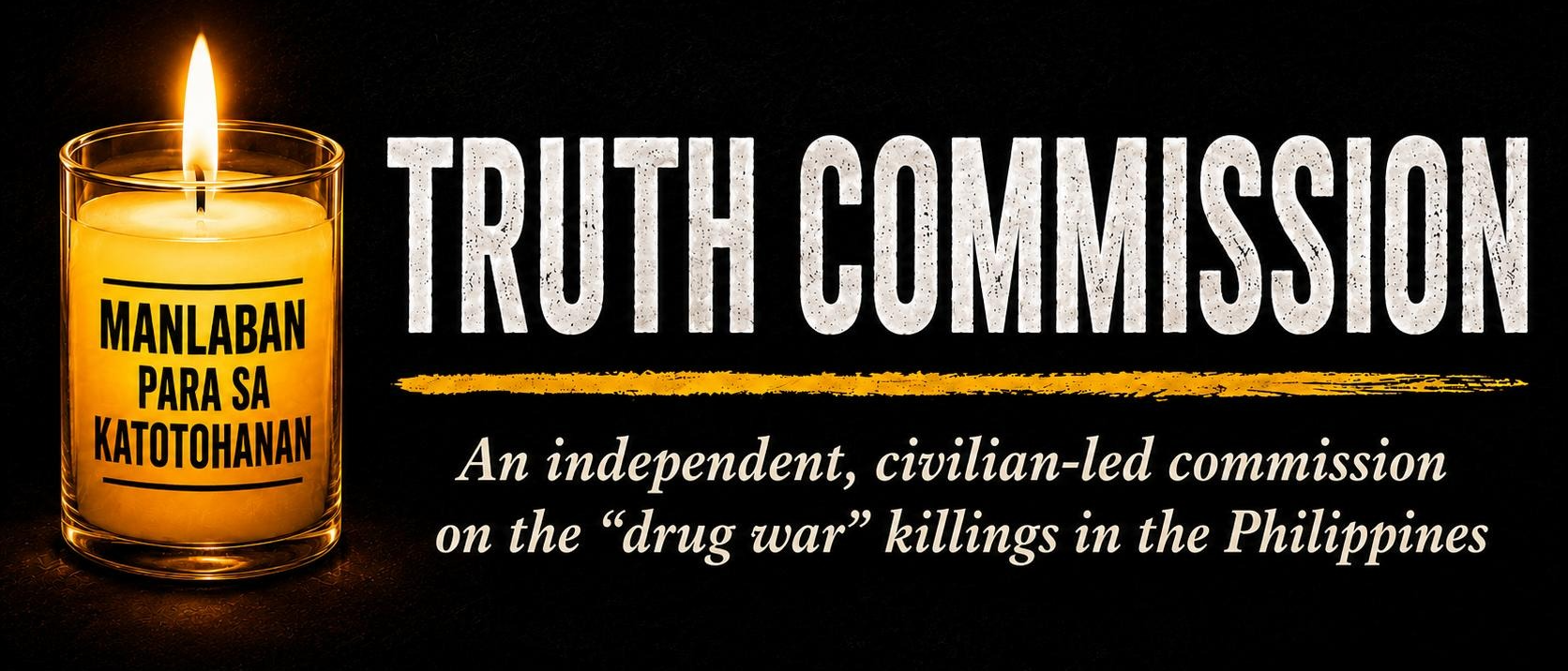
Protecting the Dignity, Safety, and Well-Being of Survivors and Victims’ Families
The Truth-Telling Session is a trauma-informed process that provides a safe and respectful space for survivors and families affected by extrajudicial killings (EJKs) to share their lived experiences.
Many participants remain vulnerable to trauma, public scrutiny, security risks, and intimidation.
To safeguard all participants, accredited media organizations are requested to observe the following guidelines:
1. No Interviews with Survivors or Victims’ Families
- Media interviews with survivors, widows, family members, or witnesses are not permitted before, during, or after the Truth-Telling Session.
- Journalists must not approach participants for comments inside or outside the venue.
- Requests for interviews shall be directed only to the designated media spokespersons.
2. Designated Media Spokespersons
The following individuals may provide official interviews or statements:
- Commissioners of the Truth Commission
- Designated legal counsel
- Authorized spokespersons identified by the organizers
3. Respect Participants’ Personal Space
- Do not follow, surround, or pursue participants as they enter, leave, or move within the venue.
- Maintain a respectful distance at all times.
- Do not block walkways or interfere with participant movement.
4. Photography and Video Coverage
- Wide shots of the venue and proceedings are permitted unless otherwise announced.
- Close-up photographs or video recordings of survivors, widows, or family members should not be taken without prior authorization from the organizers.
- Media must immediately comply with requests to stop recording specific individuals or portions of the proceedings.
5. No Recording During Private or Restricted Moments
Photography, filming, or audio recording shall not be undertaken during:
- Psychosocial support activities
- Private conversations
- Moments designated as confidential
- Any period declared off-camera by the organizers
6. Trauma-Informed Coverage
Media practitioners are encouraged to:
- Report with accuracy, fairness, and sensitivity
- Avoid sensationalizing grief, emotional distress, or trauma
- Avoid headlines, images, or editing that exploit participants’ suffering
- Present testimonies in their proper context
7. Respect Confidentiality and Security
- Do not publish personal information that may identify participants beyond what has been publicly shared during the proceedings.
- Avoid reporting information that could place survivors or their families at risk.
- Respect any confidentiality measures imposed by the Truth Commission.
8. Follow Directions from Event Officials
Media representatives shall comply with instructions from:
- The Presiding Commissioner
- The Media Relations Team
- Security personnel
- Session moderators
Failure to comply may result in suspension or revocation of media accreditation.
9. Commitment to Do No Harm
Media coverage should contribute to public understanding of the truth-telling process while ensuring that participants are not exposed to further trauma, intimidation, harassment, or unnecessary public attention.
The dignity, safety, and well-being of survivors and victims’ families shall remain the highest priority throughout the proceedings.